-
The Power of Confronting Fear: Embracing New Challenges and Joy
*tap* *tap* *tap* …is this thing on?
I was reflecting today on the nature of fear – what drives fear, how it manifests, how a person can conquer it. Then I remembered; I have a blog! So…
I didn’t learn to swim until I was well and truly an adult, maybe 29 or 30. Why? I don’t know, but I do know that for many many years the water was a source of terror to me. Then I got SO BORED of being afraid of it so SO LONG, and of feeling shame over that, so I signed up for adult swimming lessons. Going into the first lesson I was completely terrified, but within half an hour I was floating unaided. A week later I was swimming – badly, but I was doing it! Some weeks after that I dived into water for the first time. I can’t tell you the joy I felt, but also the relief that I no longer had to carry this fear with me that I had carried for years and years and years. I became a reasonable, and reasonably confident, swimmer – in a swimming pool.
Five years later I gave birth to a daughter, and of course family trips to the seaside became a not infrequent part of life. My daughter has been swimming for as long as she can remember and is supremely confident in the water, but you could not have PAID me to swim in the sea, so terrified of it was I – even though by now I was a strong swimmer. And this was completely okay – my husband is very confident in water of every kind and was happy to take responsibility for the family sea-dips. In truth we probably went to the beach about once a year, at most, and so it wasn’t too big a deal.
Then earlier this year we moved to Cornwall. We now live in a seaside village were everybody swims, sails & surfs, and children are swimming in the sea before they can walk. Being in the sea is a part of life here, and so it became time to face my fear.
Today I swam in the sea for the first time in my life, until I was out of my depth (just). It was terrifying, I was shaking afterwards, and I felt such incredible joy. My husband and daughter encouraged me the whole time (okay with just a tiny bit of mild teasing), but with their help I did it! It was exhilarating. I know now that I can only get better and better – and it’s one more source of fear that I no longer have to carry.
What’s the moral of this story? I’m not sure… So much of the sadness and badness of life and the world that we live in seems to be driven by insecurity and fear that is projected outward onto the world. I would hazard a guess that most people are not terrified about swimming in the sea (?), but also that we all have something. Maybe several somethings. Things that cause us to freeze. Things that we probably wouldn’t admit to many people, or even to ourselves. Maybe even things that we defend ourselves against, project onto others. But on the other side of that fear is confidence, is joy, is exhilaration.
Did I feel slightly silly being so obviously afraid today, on a crowded beach surrounded by confident water-babies (literal babies in some cases)? Yes, I did. Was it absolutely worth getting through that for the pure exhilaration I feel now, and the new skill I have unlocked? One hundred percent yes.
What are you afraid of? Could it be time to dive in…
-
You should employ more autistic women. Here’s why.
The hyper-focus superpower
If there’s one thing autists tend to excel at, it is hyper-focus – that is, an intense focus on one singular thing for an extended period of time, to the exclusion of all other things (eating, sleeping, social interaction, anything else on our ridiculous and ever expanding ‘to-do’ list). And you know what? It’s a super-power. There has been times in my career where I have achieved phenomenal amounts, often with little prior experience. If I want to I can and will become an expert on a topic within a day.
We are honest and direct
I don’t lie because I’m terrible at it. I can’t keep track of true things, I certainly couldn’t keep track of made-up things, so you’re going to know that what I say is what I mean. I am a member of a mothers group on Whatsapp and recently was messaged something along the lines of “Hi S, if you want to do this thing you can do. Up to you though!”
I… what?
I’m experienced enough now to know that in neuro-typical speak that might mean that that person wants me to do that thing but doesn’t want to outright ask me to do it – but honestly I have no idea! So I messaged back “Hi. Listen I’m autistic and I’m asking because I don’t know. I don’t want to do that thing. Do you mean that you want me to do that thing? You’ll have to say if so because I won’t be able to guess 😊”. All this to say, I’m going to tell you what I mean and ask for what I need in language that is very clear.
We are loyal
If I have decided I want to work for you, or be friends with you, or generally be around you, then I really do and you will know it.
You will get a lot more than you pay for
Back to the hyper-focus. The job will get done at any cost, sometimes until I am burned out, but more on that later…
We see things, links and patterns that others don’t, and we will say it
This. I think this is because we don’t automatically see or understand covert, unspoken things which are so often an aspect of neuro-typical living, and we tend to think very logically, so if there’s a pattern to be seen we will see it and say it. It’s also why I’ve always been naturally very good at Maths and landed in a career in data.
We are innovative and creative through constantly learning new skills and growing into new spaces
I have never been diagnosed or assessed for ADHD but I know that I have many traits which might be described as such – and actually I strongly believe autism and ADHD are two sides of the same coin (more on that another time). So I pick up a lot of hobbies and passions, become very very good at them, and then move onto something else. I play 6 musical instruments to varying degrees of aptitude, and I sing, for example. I have/sometimes also cross-stitched, painted, climbed, I read a lot…
We are compassionate leaders – we have been through it
I think this might be where we’re getting into the territory of autistic women particularly, but after a life-time of successfully masking and observing what is ‘normal’ human behaviour I have developed a fair level of expertise in it. Moreover, I really LOVE people and am fascinated by human behaviour – it’s my special interest if you will. I love getting to know people, understanding what makes them tick (and what really shuts them down), I love interesting people, slightly outside the norm people, extraverted people, introverted people… all of it.
Unfortunately my childhood was marked by a fair amount of bullying (a not uncommon autistic experience) and so I also have a fair amount of insight into people at their worst too. A few years ago I decided I wanted to be a therapist (I didn’t, I just needed therapy) and embarked on a year-long course in a theory of personality and communication known as Transactional Analysis. I’ll talk more about this another day, but it provides a fascinating insight into how humans communicate and, perhaps more interestingly, fail to communicate. All this experience seems to have come together to make me a strong and compassionate leader of people (I know this from feedback I have received from people who have worked for me) – because I have been through it!
We are connectors
Because we autistic women are observers, because we see and understand human behaviour, because we also tend to be strong technically, we form very strong bridges from the technical to the non-technical. Because we see patterns we can see where there are gaps, and how they can be filled – and then we go ahead and fill them.
What you will need to accommodate to do that
There are some things you are going to need to accept about us if you want to get the benefit of all the sweet sweet goodness I’ve described above.
- You might need to stop us from time to time to stop us burning out
- We’re hyper-focused, we’re loyal, after a lifetime of feeling wrong we like praise… you might have to step in from time to time to stop us from burning ourselves out. The other downside of a lifetime of feeling like an oddball is that we are often very bad at self-care and self-compassion. Many autistic people also report feeling a sense of being disconnected from their own feelings and their own physical experience – their own body almost – which can exacerbate this.
- We are not your admin staff
- It is not uncommon for women to be expected to pick up admin or team care. Google it, it’s a thing. We can’t do that, and if you try to make us you’ll lose all the benefit of the hyper-focus I’ve described above. Hire admin staff.
- We are certainly not your social secretary
- Again, often it’s expected that women will organise social events for the team. If you want a social event in which we all sit around in silence and read books then fine, ask me. Otherwise ask someone else, I’m hyper-focused right now…
- We’re going to need quiet and downtime
- I’ve spoken about overwhelm before, and will again, but if I am forced in environments of extreme sensory overload and no respite for long periods of time I will shut down. It doesn’t take much to stay on track, but if you give me quiet and space to recharge my batteries you will get me at my very best consistently. Years ago as a young coder I would sit in the office with headphones on much of the time. A boss complained that I wasn’t getting involved in team chat and that bothered him, I tried to explain that I can either chat, OR do my work, but not both
- We’re likely to produce at unsociable hours
- I have suffered from chronic insomnia all my life – a family trait – and if I can’t sleep I will often work, and because it’s the middle of the night I can hyper-focus to my hearts content and get a lot done. I will however sometimes be tired during the day as a consequence. Let me nap during the day if there is space! Let me send emails in the night if I want to! You don’t have to do the same! I will be so much more productive.
- We are likely to have unusual quirks – we might dress outside the norm, we might speak or express ourselves outside the norm
- I don’t understand the mechanics of this and will research it at a later date, but my anecdotal experience is that neuro-typical women tend to have unusual quirks stylistically. It might be brightly coloured or unusually styled hair or clothing, it might be a fondness for very comfortable clothing, it might be an obsession with unusual shoes (okay that’s my thing solely probably… – I once walked into a door admiring another woman’s amazing shoes).
- There are times that we will seem disengaged
- I have been told that when I am hyper-focused, or overwhelmed, it can be as if I am not there, and I know that’s true. It will pass if you let it and don’t poke it.
- We will almost certainly tell you something, at some point, that is challenging or hard to hear
- Bringing all the above together, we see things that others don’t and we say what we think, and we might not appreciate the social etiquette that might stop others from saying what we want to say – often it doesn’t occur to me that what I am saying is challenging until I witness someone else’s reaction to it. It can be an uncomfortable experience, I know.
So what do you think? Is it worthwhile to make some accommodations to reap the benefits described at the top, in a time of severe skills shortage and the great resignation?
Neuro-diverse women, what are your views? Love this? Hate it? What have I missed? I’d love to talk it through, and to learn 😊
*Note: This is all anecdotal based on my experiences and the experiences of people I know who are neuro-divergent. I have not carried out a survey or anything like that… although one day I might do that.
- You might need to stop us from time to time to stop us burning out
-
That day in 2003 I jumped out of a plane from 14,000 feet before 10 o’clock on a Saturday morning.
So I’m out of bed bright and breezy (ish) at 5am on Saturday morning, only mildly hung over. We arrive at Langar Airfield in Nottingham just after 8, put our names down and then wait. The early start wasn’t for nothing; we’re on the first lift! Get some breakfast (is this wise?) and wait a bit – the briefing starts at 9, goes on for about 20 minutes… and it all seems a bit abstract really, I haven’t really processed the thought of what I’m about to do properly, it’s all very interesting like but…
A tall bald guy with a pierced ear shouts out “Who’s S?”, that would be me, “You’re on the first lift with me, we’ll get you suited up straight after this.”
Well at least I know what he looks like now. I try and gauge how trustworthy he is (with my life like) by looking at him, but it’s very difficult to judge that sort of thing at first glance. Ah well. The briefing finishes – it all sounds very simple, do what you’re told when you’re told it, bend your knees to land – and I have to go to the loo. I go, I come back, my instructor’s shouting “S. Can we get on with it please?” Fab, I’ve already pissed off the guy I’m about to plummet to the earth strapped to. He seems quite hard, makes jokes about how he finds it difficult to believe people place so much trust in complete strangers, I’m not sure this is a good sign. I get into my jump suit thing (and of course I’ve left my ticket in the back pocket of my jeans, exactly as I was told not to do!) and then the harness. It’s bright yellow, goes round your arms and your legs, and is reassuringly secure feeling. The clips by which I will be connected to my instructor (his name is Dave, I think, or possibly Paul and he has been jumping since 1978, which is very very encouraging) don’t seem quite sturdy enough for the job in hand, but I decide not to bring it up. So out we go. Photos are taken outside on the airfield, chat chat laugh laugh, and still it all seems strangely remote. I’m still in denial. So everyone starts filing to the plane and I’ve lost my instructor, of course. Find him, kiss my boyfriend (goodbye?), then off we go, walking across the airfield to the tiny plane. My instructor seems to be warming up a bit and I am being sickeningly nice to him – what choice do I have? He seems okay though. We get to the plane, they start it up, and I climb up the tiny metal ladder into the plane (I remember thinking, wouldn’t it be ironic if I fell off the ladder and died… no probably not). He climbs in behind me and I have to sit between his legs, then he clips my shoulders to him. It is a very tight squeeze in the aeroplane, but it’s quite comfortable all the same, and as we take off I find myself quite calm. The scenery is quite stunning, the banter in the plane is heartening, nobody seems overly concerned, and up we go. It takes around 20 minutes to get to 14,000 feet and as we’re going there’s a lot of laughing and joking, music is playing (the kind of music you’d expect to be playing on your way up to a sky dive funnily enough), my instructor discovers I’m ticklish and tickles me intermittently, everyone’s very friendly. I can’t stop smiling – it seems insane what I’m doing and I’m loving it. It’s as though we’re all on our way to war or something, and we’re all laughing and joking, because what else can you do? I turn round to check my clips are firmly attached to my instructor, which he finds very funny indeed, he’s really very nice after all, keeps making jokes and rubbing my shoulders and showing me things out the window and reassuring me again that he has more experience than anyone else in the plane, and it’s really very entertaining and I am still so very very calm (if smiling just a little too much). We must be getting nearer because he tells me to put my hat on we have to sit in our instructors laps while they clip our legs to them and tighten them off (some of the lads are looking quite uncomfortable – as if the situation isn’t bad enough without having to sit on a bloke’s lap). And I’m still calm. Then the engines die down and they open the door (it’s a Perspex roller shutter thing). I am no longer calm, I am terrified, what the fuck am I about to do????? But there’s no going back, I’m here, I’m doing this. Fuckity fuck fuck, this was a very bad idea.
There’s some solo jumpers at the front of the plane, then three cameramen, one for each person who wants to be filmed (and one of whom is very very tasty indeed, blonde surfer look, cute). So the doors open and the solos… disappear out of it. It’s the strangest thing watching someone jump out of a plane, they’re there, and then they just step off the edge and they’re gone. One girl seems to kind’ve float away spread eagled – very fast like – it’s so strange. And the thing about skydiving is this – it’s not right. Everything about it is wrong. You should always have something solid beneath your feet, always. Jumping into the sky from a perfectly working plane… isn’t right. Then the first tandem people go and that’s even weirder because, as they’re so much heavier, they just drop like a stone. Out of the plane. And your brain can’t compute that distance, you think they’ll splat on the ground in seconds – but of course at that height even if they were to freefall all the way to the ground it’d take two minutes. Scary thought. Every time a tandem goes the plane jolts because of the weight that’s just left. And that’s it. Me next. I’m terrified, there is no other way to describe the feeling. Pure terror, but you force yourself to move forward…
You’re sitting on the edge of the open doorway of a plane, this isn’t right. You bend your legs under the plane, cross your arms across your chest, this isn’t right. You don’t look down. You put your head back on your instructors shoulder and he tells you to arch, this is not right. The next few seconds are the most terrifying of my life so far. You fall off the plane, sink almost, and in a split second there’s a roaring in your ears and the world is somersaulting around you – you are falling out of a plane you are falling out of a plane you are falling out of a plane…. That first couple of seconds… you’re sat there, something solid beneath you, then you’re falling into nothing so fast you can’t breathe. The terror is overwhelming, to just fall like that…. unbelievable. Like all your falling dreams rolled into one, you’re falling you’re falling you’re falling and your brain just can’t compute the fact, you’re falling through the air. My friend described it as weightlessness but it isn’t, you can feel gravity all too well. Then you just have to snap out of it. You can’t spend the next minute of your life in a state of screaming terror, so you have to tell your brain to relax and trust that everything that is supposed to work will and you will not die. And it’s hard but you do it. You’re facing the ground at this point, face down to the ground, you can see the world beneath you and somehow it doesn’t feel as if you’re falling. You’re so far away from the earth you don’t seem to be getting any nearer to it and the terror, although it still isn’t far beneath the surface, subsides just a little bit. I think the feeling of falling away from the plane makes it far worse, but when you have no frame of reference it is very bizarrely like you’re floating, albeit with the wind whipping past your head at 120mph. My instructor points out some things, other people falling, his altimeter, and I try to remember to keep my arms out and legs up the way I was told. He hold my arms to my side for a second and we fall even faster, it seems to go on for such a long time and still the ground doesn’t get any nearer. It crosses my mind briefly how terrifying it must by when your chute doesn’t open, the only thing that’s keeping me together at this point is that any minute now the chute will open…
And then it does, and the world becomes an entirely different place. As it opens we are jerked backwards quite violently, but not as violently as I thought, I see the orange of our canopy out of the corner of my eye and suddenly calm is restored. It is the most beautiful thing I have ever done. Everything is silent, or as near as, it is so beautifully different to the freefall. You’re hanging there, still not moving it seems, and you feel like a bird. I can hear my instructor now and he chats to me all the way down. We’re above the cloud and he points out our shadow on it, points out other people, and it is so tranquil so peaceful. He gives me control, show me how to put my arms up to make us go slower and down to make us go faster. My stomach goes as we do that, I’m still panicky and I’ve read about parachutes collapsing in mid air. I do not want that. Beautiful as it is I am still fully aware how far off the ground we are. We do this bizarre spirally thing to bring us down faster – this again I’m not keen on, but he laughs and tells me to calm down. I keep grabbing my straps which he tells me not to do and he grabs my legs with his and I find that when I just relax the experience is so much more enjoyable than when I’m panic-ing and grabbing for things. What’s to hold on to? You’re suspended in mid air by your shoulders. As I come in to land I can make people out on the ground – we fly straight over the airfield and it’s incredible, so exhilarating. Yet I’m still nervy about the landing so I panic a bit again and fall onto my knees as we land. I’m on top of the world, buzzing with adrenaline, wanting to hug everyone. I give my instructor a kiss on the cheek and we go back to the building – it’s amazing, my head feels kind’ve tight and I can’t believe what I’ve just done, but I feel incredible. Just before we left the aeroplane my instructor said to me “You’re about to have the best day of your life”, he wasn’t wrong. It was the best day of my life. The day I jumped out of a plane from 14,000 feet before 10 o’clock on a Saturday morning.
-
Neuro-divergent woman
I am in my mid-40’s, a professional, a mother, a friend, a thinker… and I’m also neuro-divergent – in fact I’m autistic. Four years ago when I was not autistic (I was) I was surfing the Internet reading blog posts when I came across a woman in America who described quite vividly her experience of having Aspergers (I don’t think we’re allowed to call it that now, but that’s what she called it). A lot of the experiences she described rang a particular bell in my mind, but I dismissed the bell, the way we do. Shortly afterwards I followed up with a coaching session in which the coach also raised the possibility of autism in women and how this presents – I remember that hour long coaching session vividly. In that one hour I went from
Oh yeh that’s kind’ve interesting… in an abstract way…
to
What the hell?! No… I’m 41 years old, I would know that by now…
to
HOLY SHIT!!
In that one hour I went from a position of absolute ignorance, really, about autism at all and especially how it presents in woman, or even that it exists in women, to an absolute brain-melting moment.
A few months after this I put myself in the process of being assessed for autism, and this is how I “officially” became a neuro-divergent women – or, to quote the 12-page document I received from the assessment “The results on the ADOS 2 algorithm show that Mrs J is on the Autism Spectrum”. Being an autistic woman, by this time I already knew that and was well on my way to becoming something of an expert – because, well, if there’s one thing we autists excel at it’s hyper-focus.
One of the excellent woman who carried out my assessment said to me “I see women in their 40s, their 50s, their 60s who have lived their whole lives without knowing this about themselves”. It was a pivotal moment in my life, one I’ll never forget.
So how does this happen and how did it happen to me? How many other women is it happening to?
We already know that males are more frequently diagnosed with autism than females. The prevalence ratio is often cited as about 4 males for every 1 female diagnosed but more recent research indicates that it closer to 3:1 or 2:1. It is debated whether this is due to a sex difference in rates of autism spectrum disorders (ASD) or whether females are underdiagnosed. There is evidence that females may also receive diagnoses somewhat later than males. My own view, formed since my diagnosis, is that females are hugely under-diagnosed AND receiving diagnoses later than males.
I’ve always been different, slightly… ‘weird’ maybe. High school was hard/overwhelming/loud. I did well academically but this time was marked by periods where I’d also disconnect and just really stop attending. I couldn’t have told you why that was at the time – I now that this was likely what is known as autistic burnout – I guess like most people I assumed that everybody is silently going through these things & feeling these things. I did well enough despite this and then I went on to get a degree in Mathematics. Of course again university was overwhelming and hard but I got through it – everybody goes through these things! I then spent a year on an internship in America, then came home to begin my career as a data professional.
Sometimes I would make good, strong friendships – for example for the majority of high school I was lucky to have a good strong group of female friends – put other times it would be much harder and I would feel lonely. It really varied and I know now that I am often attracted to friendships with other neurodivergent people – unfortunately I have also attracted people who would take advantage of a certain level of social naivete I have always displayed.
Since my diagnosis I have, as autists do, researched extensively this experience – my experience – and also the experience it turns out of many, many women like me. How do we get to middle age without understanding this profound aspect of who we are and without this fundamental difference really occurring to us or to anyone else?
I’ve learned that the experience of being neurodivergent is for women very different that it is for men. Autistic women present very differently than autistic men and as so many things in our world and in our society, the experience of men has become the standard, the default, which leaves many women who don’t see themselves in the accepted definition.
So how are some of the ways that it has presented for me?
I’ve given to hyper-focus and once focused on a thing I will focus on that to the exclusion of anything else. It’s been described to me by loved ones as if I am sometimes not there. This in many ways could be a superpower in that I can achieve huge quantities of work in time scales that for other people might be unusual. I can become an expert on a subject fairly quickly, again through focusing on that and nothing else – in many ways this superpower has obviously powered my career to the level that I enjoy today. The downside however is that friends and loved ones and family can feel excluded, as if I’m no longer with them – because of course I’m not. This level of focus can also make transitions very difficult – transitioning from one thing to the next or from being very focused on a piece of work and then having to move quickly to something else. This makes office spaces very challenging – when things shift and change very quickly and there’s a lot of background noise this can become overwhelming very quickly. When I have had to be in an office environment five days a week I would spend significant amounts of time finding quiet corners just to hide or sitting in empty offices or hiding out in toilet cubicles.
Friendships can also be impacted. Over the years I have developed some very good, very close friendships. At the same time, I can disappear for months at a time and this can be difficult for people who think “OK, she doesn’t actually care”. My closest and oldest friends are supremely patient and accepting.
Communication has been a consistent challenge in my life. One-to-one conversation is my happy place and exactly where I want to be – that’s how I like to communicate. In a group it’s much harder – I don’t know who to focus on or who I’m talking to. If a lot of people are talking at the same time I can’t hear or filter out that background noise so that it can be very difficult to hear what’s being said to me or even to realize that something is being said to me – trying to do that and filter out background noise and formulate the response to what’s being said can quickly become overwhelming. Volume and tone of voice is another interesting aspect of this experience – I will often speak too loud or laugh very loudly without realising it. I smile, but not ‘enough’ and I often look intense, even angry, or quite blank-faced. I often miss social cues, especially while hyper-focused and that can very easily come off as rude, which I won’t notice. I say what I think, and for a long time it didn’t occur to me make things seem nicer for other people’s comfort. Face blindness is another big one, I find it very hard to recognise people I don’t care about, even if I’ve spoken to them a lot and that is strange for people.
Sometimes I lose the power of speech altogether – if I’m very tired and have experienced a lot of stimulation. Again this is something I’ve experienced throughout my life and really just assumed everybody did.
This brings us on to masking, which I would argue is fundamental part of the experience of autistic woman especially. Women are socialized to fit in and to be sociable, I think to a much greater extent than men. As a child this was something I found almost impossible, but over decades and by observing how people are in the world I’ve learned the best way to act to fit in in different situations. I now know this is masking, and I’ve become so good at it over decades that have long since forgotten that I am even doing it – I assumed that everybody was doing this! I have learned a lot of rules of ‘normal behaviour’ which makes it a lot easier to blend in. I observe what is normal behaviour a lot. I wouldn’t be half as expressive with my face as I am if I hadn’t learned that it makes people uncomfortable when I don’t – they think I’m angry and being aggressive, especially if I’m talking very fast and maybe a bit too loud. And of course people don’t like you if you make them uncomfortable.
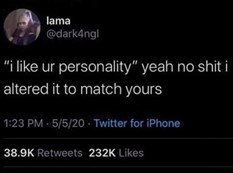
Overwhelm is a constant of the autistic experience. Once overwhelmed I will often shut down, stop speaking and stop interacting. I’ll find places to go hide if forced to be in an overwhelming environment and quickly shut down. When I was young I was renowned among my friends for disappearing in clubs – I might be hiding in the toilet or I might simply have left.
There are many many other aspects of my experiences as an autistic women and really only three years post diagnosis I’m still figuring a lot out. I’m also starting to realise that there are many many women quietly experiencing life as I do – particularly in the tech sector – who are experiencing similar things and perhaps don’t realise that they are not alone and that there is an easier way to exist in the world.
So, I’m starting this blog to reflect on my experience and the experiences of others like me – women who experience life and the world a little differently from the mainstream – with the hopes of unpacking some of this stuff, and maybe even making life a little easier along the way.
P.S. This is my first ever blog post by the way – I’d love to know what you think…
Identifying the lost generation of adults with autism spectrum conditions
What Is the Male-to-Female Ratio in Autism Spectrum Disorder? A Systematic Review and Meta-Analysis
-
Subscribe
Subscribed
Already have a WordPress.com account? Log in now.
 NeuroDataWoman