I am in my mid-40’s, a professional, a mother, a friend, a thinker… and I’m also neuro-divergent – in fact I’m autistic. Four years ago when I was not autistic (I was) I was surfing the Internet reading blog posts when I came across a woman in America who described quite vividly her experience of having Aspergers (I don’t think we’re allowed to call it that now, but that’s what she called it). A lot of the experiences she described rang a particular bell in my mind, but I dismissed the bell, the way we do. Shortly afterwards I followed up with a coaching session in which the coach also raised the possibility of autism in women and how this presents – I remember that hour long coaching session vividly. In that one hour I went from
Oh yeh that’s kind’ve interesting… in an abstract way…
to
What the hell?! No… I’m 41 years old, I would know that by now…
to
HOLY SHIT!!
In that one hour I went from a position of absolute ignorance, really, about autism at all and especially how it presents in woman, or even that it exists in women, to an absolute brain-melting moment.
A few months after this I put myself in the process of being assessed for autism, and this is how I “officially” became a neuro-divergent women – or, to quote the 12-page document I received from the assessment “The results on the ADOS 2 algorithm show that Mrs J is on the Autism Spectrum”. Being an autistic woman, by this time I already knew that and was well on my way to becoming something of an expert – because, well, if there’s one thing we autists excel at it’s hyper-focus.
One of the excellent woman who carried out my assessment said to me “I see women in their 40s, their 50s, their 60s who have lived their whole lives without knowing this about themselves”. It was a pivotal moment in my life, one I’ll never forget.
So how does this happen and how did it happen to me? How many other women is it happening to?
We already know that males are more frequently diagnosed with autism than females. The prevalence ratio is often cited as about 4 males for every 1 female diagnosed but more recent research indicates that it closer to 3:1 or 2:1. It is debated whether this is due to a sex difference in rates of autism spectrum disorders (ASD) or whether females are underdiagnosed. There is evidence that females may also receive diagnoses somewhat later than males. My own view, formed since my diagnosis, is that females are hugely under-diagnosed AND receiving diagnoses later than males.
I’ve always been different, slightly… ‘weird’ maybe. High school was hard/overwhelming/loud. I did well academically but this time was marked by periods where I’d also disconnect and just really stop attending. I couldn’t have told you why that was at the time – I now that this was likely what is known as autistic burnout – I guess like most people I assumed that everybody is silently going through these things & feeling these things. I did well enough despite this and then I went on to get a degree in Mathematics. Of course again university was overwhelming and hard but I got through it – everybody goes through these things! I then spent a year on an internship in America, then came home to begin my career as a data professional.
Sometimes I would make good, strong friendships – for example for the majority of high school I was lucky to have a good strong group of female friends – put other times it would be much harder and I would feel lonely. It really varied and I know now that I am often attracted to friendships with other neurodivergent people – unfortunately I have also attracted people who would take advantage of a certain level of social naivete I have always displayed.
Since my diagnosis I have, as autists do, researched extensively this experience – my experience – and also the experience it turns out of many, many women like me. How do we get to middle age without understanding this profound aspect of who we are and without this fundamental difference really occurring to us or to anyone else?
I’ve learned that the experience of being neurodivergent is for women very different that it is for men. Autistic women present very differently than autistic men and as so many things in our world and in our society, the experience of men has become the standard, the default, which leaves many women who don’t see themselves in the accepted definition.
So how are some of the ways that it has presented for me?
I’ve given to hyper-focus and once focused on a thing I will focus on that to the exclusion of anything else. It’s been described to me by loved ones as if I am sometimes not there. This in many ways could be a superpower in that I can achieve huge quantities of work in time scales that for other people might be unusual. I can become an expert on a subject fairly quickly, again through focusing on that and nothing else – in many ways this superpower has obviously powered my career to the level that I enjoy today. The downside however is that friends and loved ones and family can feel excluded, as if I’m no longer with them – because of course I’m not. This level of focus can also make transitions very difficult – transitioning from one thing to the next or from being very focused on a piece of work and then having to move quickly to something else. This makes office spaces very challenging – when things shift and change very quickly and there’s a lot of background noise this can become overwhelming very quickly. When I have had to be in an office environment five days a week I would spend significant amounts of time finding quiet corners just to hide or sitting in empty offices or hiding out in toilet cubicles.
Friendships can also be impacted. Over the years I have developed some very good, very close friendships. At the same time, I can disappear for months at a time and this can be difficult for people who think “OK, she doesn’t actually care”. My closest and oldest friends are supremely patient and accepting.
Communication has been a consistent challenge in my life. One-to-one conversation is my happy place and exactly where I want to be – that’s how I like to communicate. In a group it’s much harder – I don’t know who to focus on or who I’m talking to. If a lot of people are talking at the same time I can’t hear or filter out that background noise so that it can be very difficult to hear what’s being said to me or even to realize that something is being said to me – trying to do that and filter out background noise and formulate the response to what’s being said can quickly become overwhelming. Volume and tone of voice is another interesting aspect of this experience – I will often speak too loud or laugh very loudly without realising it. I smile, but not ‘enough’ and I often look intense, even angry, or quite blank-faced. I often miss social cues, especially while hyper-focused and that can very easily come off as rude, which I won’t notice. I say what I think, and for a long time it didn’t occur to me make things seem nicer for other people’s comfort. Face blindness is another big one, I find it very hard to recognise people I don’t care about, even if I’ve spoken to them a lot and that is strange for people.
Sometimes I lose the power of speech altogether – if I’m very tired and have experienced a lot of stimulation. Again this is something I’ve experienced throughout my life and really just assumed everybody did.
This brings us on to masking, which I would argue is fundamental part of the experience of autistic woman especially. Women are socialized to fit in and to be sociable, I think to a much greater extent than men. As a child this was something I found almost impossible, but over decades and by observing how people are in the world I’ve learned the best way to act to fit in in different situations. I now know this is masking, and I’ve become so good at it over decades that have long since forgotten that I am even doing it – I assumed that everybody was doing this! I have learned a lot of rules of ‘normal behaviour’ which makes it a lot easier to blend in. I observe what is normal behaviour a lot. I wouldn’t be half as expressive with my face as I am if I hadn’t learned that it makes people uncomfortable when I don’t – they think I’m angry and being aggressive, especially if I’m talking very fast and maybe a bit too loud. And of course people don’t like you if you make them uncomfortable.
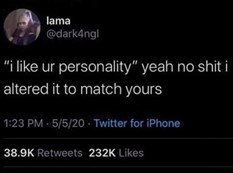
Overwhelm is a constant of the autistic experience. Once overwhelmed I will often shut down, stop speaking and stop interacting. I’ll find places to go hide if forced to be in an overwhelming environment and quickly shut down. When I was young I was renowned among my friends for disappearing in clubs – I might be hiding in the toilet or I might simply have left.
There are many many other aspects of my experiences as an autistic women and really only three years post diagnosis I’m still figuring a lot out. I’m also starting to realise that there are many many women quietly experiencing life as I do – particularly in the tech sector – who are experiencing similar things and perhaps don’t realise that they are not alone and that there is an easier way to exist in the world.
So, I’m starting this blog to reflect on my experience and the experiences of others like me – women who experience life and the world a little differently from the mainstream – with the hopes of unpacking some of this stuff, and maybe even making life a little easier along the way.
P.S. This is my first ever blog post by the way – I’d love to know what you think…
 NeuroDataWoman